Free World Cup 2026 Wallchart: A Fun Way to Boost Your Child's Learning
Download our free printable World Cup 2026 wallchart and use it to sneak in maths, geography and reading practice at home this summer.
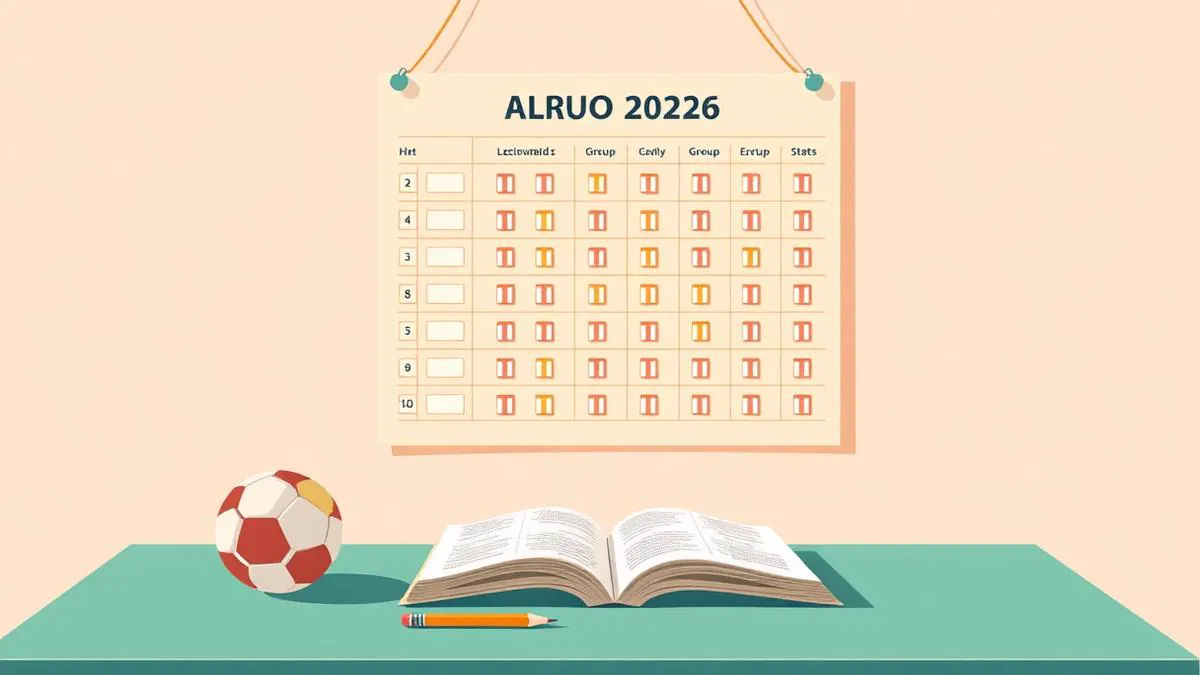
The 2026 World Cup is nearly here — and if your child is even mildly football-mad, it is one of the easiest ways to keep learning ticking along over the summer holidays. To help, we have put together a free printable World Cup 2026 wallchart with every group, fixture and knockout bracket, ready to fill in as the results come in.
You can grab it from our resources page: Download the World Cup 2026 Wallchart (PDF).
Why a wallchart is more than just decoration
Stuck on the kitchen wall, the chart quickly becomes a low-pressure prompt for conversation and quick bursts of learning. There is no worksheet, no timer and no "right" answer — just a tournament your child already cares about, with numbers, names and countries attached.
That emotional buy-in matters. Children learn faster when the context feels theirs, and a wallchart turns a month of football into dozens of tiny, natural teaching moments.
Maths practice, hidden in plain sight
The group stage is a goldmine for Key Stage 1 and 2 maths:
- Addition and subtraction — "England scored 3, drew 1-1, then won 2-0. How many goals have they scored in total?"
- Goal difference — a lovely, real-world introduction to negative numbers for Year 4-6.
- Points tables — 3 for a win, 1 for a draw. Ask your child to work out who qualifies before you check the actual standings.
- Percentages and averages — older children can calculate shots on target, possession percentages or average goals per game from BBC or Sky match stats.
- Probability — "Two teams are level on points and goal difference. What are the chances each one goes through?"
None of it feels like homework, which is precisely why it works.
Geography and general knowledge
Every match is a prompt for a two-minute geography chat:
- Find each qualifying nation on a world map or globe.
- Which continent is it on? Which ocean does it border?
- What is the capital city? What language do they speak?
- The tournament is hosted across Canada, Mexico and the USA — a natural way to talk about North America, time zones and why kick-off times feel odd from the UK.
For 11+ families, this kind of general knowledge quietly strengthens the comprehension and vocabulary work that comes up in verbal reasoning and English papers.
Reading, writing and comprehension
Match reports are short, punchy and full of interesting vocabulary — perfect for reluctant readers. Try:
- Reading a BBC Sport match report together and picking out three new words.
- Writing a five-sentence match report after a game your child watches — who, what, where, when, why.
- Predicting the next round in writing, with reasons ("I think Brazil will beat France because…"). This is early discursive writing practice without the pressure.
Older children preparing for the 11+ can turn a prediction into a proper paragraph with a clear point, evidence and explanation.
How to use the wallchart at home
A few gentle suggestions from our tutors:
- Print it in colour if you can and put it somewhere everyone walks past.
- Fill it in together after each match day, not in one big session.
- Ask one question per game — a maths one, a geography one, or a "what surprised you?"
- Let your child be the expert. If they know more about the teams than you do, that is brilliant — explaining things back is one of the strongest ways to learn.
- Keep it optional. The moment it feels like schoolwork, the learning stops.
Ready to print
The wallchart is completely free, no email required. If you'd like more low-pressure summer learning ideas — or a tutor who can weave your child's interests into their sessions — take a look at our resources hub or book a free consultation.
Enjoy the tournament — and the maths.
Ready to help your child thrive?
Book a free consultation with one of our qualified tutors and we'll build a tailored plan for your child.